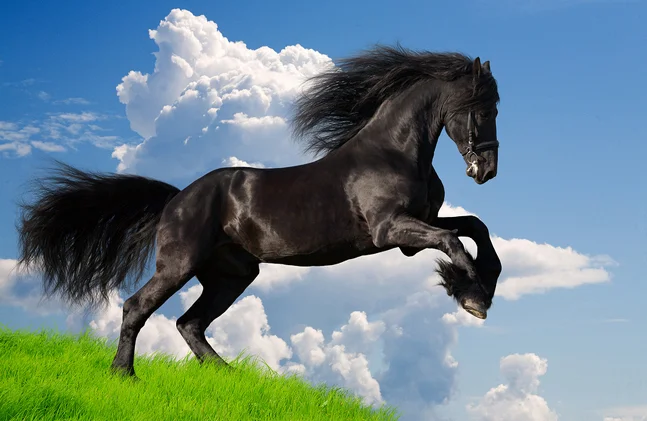

Beautiful Horse Breeds in the World. There are many horses in this world But Some of them are very expansive, rare and unique. So These are the 5 Beautiful Horse Breeds in the World. In This list all 5 Horses are unique, rare and Expensive.
Table of Contents
1. Arabic Horse
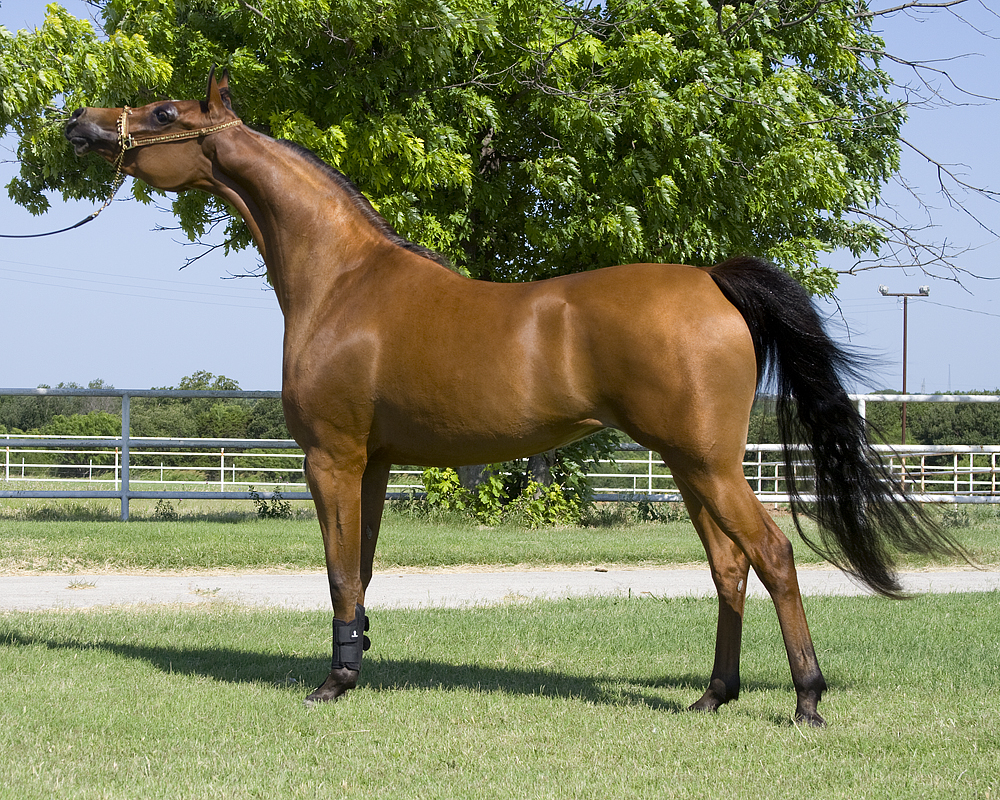
The Arabian horse is one of the oldest and most recognisable horse breeds in the world, originating in the Middle East’s Arabian Peninsula. famous for its beauty, endurance, and intelligence. They were developed by the Bedouin tribes in the harsh desert environment of the Arabian Peninsula. The Bedouins treated their horses as members of the family. The Arabian is instantly recognisable due to its unique structure. They have a long, arched neck that is set high on well-angled shoulders. Their body is compact and strong, with a short, level back. Typically between 14.1 and 15.1 hands high, making them a true “horse” in character despite often being pony-sized. The most common are bay, gray, chestnut, and black.
The Arabian horse is one of the oldest and most recognisable horse breeds in the world, originating in the Middle East’s Arabian Peninsula. famous for its beauty, endurance, and intelligence. They were developed by the Bedouin tribes in the harsh desert environment of the Arabian Peninsula. The Bedouins treated their horses as members of the family.
The Arabian is instantly recognisable due to its unique structure. They have a long, arched neck that is set high on well-angled shoulders. Their body is compact and strong, with a short, level back. Typically between 14.1 and 15.1 hands high, making them a true “horse” in character despite often being pony-sized. The most common are bay, gray, chestnut, and black. Arabians are known for being intelligent, loyal, energetic, and highly trainable.
The Arabian horse’s speed, stamina, and agility make it highly versatile and a dominant force in endurance riding and competitive trail events. They were commonly used historically in war due to their speed and resilience. This is the breed’s natural forte. Their incredible stamina, efficient lungs, and ability to recover quickly make them the undisputed champions of long-distance riding. Their intelligence and bond-making ability make them excellent trail and pleasure horses for an experienced rider. They are quick to learn and highly aware of their surroundings.So Arabian Horse is one of 5 Beautiful Horses in the World.
Some Key Facts
- Lifespan: 25-30 years
- Temperament: Intelligent, sensitive, spirited, and willing to form deep bonds with humans.
- Arabian horses were bred by Bedouin tribes
- Friendly and people-oriented
- The famous war horse of Emperor Napoleon Bonaparte
2. Halflinger
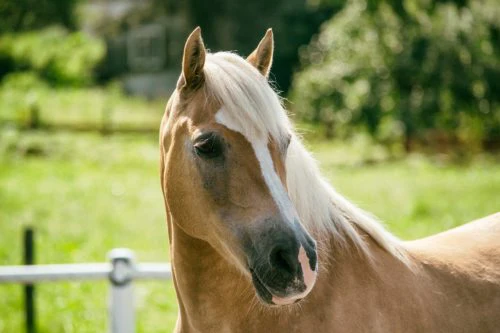
A distinctive, versatile horse breed known for its golden chestnut coat and a long, flowing flaxen or white mane and tail. Halflinger is a Beautiful Horse Breed in the World. The Haflinger is a beautiful, sturdy, and friendly horse breed from the mountains of Austria and northern Italy and developed in the late 1800s in the Tyrolean Alps. The breed takes its name from the village of Hafling in the South Tyrol region. The Haflinger is built for strength and sure-footedness. The most defining trait.
They are exclusively chestnut, in shades from a light gold to a rich liver chestnut. They are compact, powerful, and deep-bodied with a strong, broad back, muscular croup, and strong legs with clean, hard bone. They are surprisingly substantial for their height. They are Very gentle, calm, and friendly. strength is impressive for their size they can carry adults easily. hey are known for their calm, patient, and people-oriented demeanor. the Haflinger is a golden gem of the horse world. It combines the beauty and refinement of its Arabian ancestry with the strength and serenity of a mountain horse, resulting in one of the most trustworthy, versatile, and beloved breeds for the average horse owner.
Comparison with the Arabian Horse
| Feature | Arabian Horse | Haflinger |
|---|---|---|
| Origin | Arabian Desert | Tyrolean Alps |
| Temperament | Spirited, sensitive, “hot” | Calm, willing, “cold-blooded” |
| Primary Build | Refined, leggy, built for speed & endurance | Stocky, muscular, built for strength & agility |
| Color | Bay, Grey, Chestnut, Black | Always Chestnut with Flaxen Mane/Tail |
| Ideal For | Experienced riders, endurance, show | Families, novices, driving, trail riding |
3. Akhal-Take

When we talk about Beautiful Horse Breeds in the World Akhal-Take on top. Akhal-Take also know as ”Golden Horse” famous for its metallic shine, slim athletic build, and incredible endurance. it is a national treasure of Turkmenistan & breed by the nomadic Tekke tribe. The shimmer is caused by a unique hair structure that refracts light. They have a lean, elegant, and athletic build, often compared to a greyhound. The Akhal-Teke is one of the oldest existing horse breeds, dating back over 3,000 years. Their hair has a unique structure that refracts light, creating a dazzling metallic or golden shine.
They are extremely quick to learn and highly perceptive. The breed is globally rare, with fewer than 7,000 individuals in the world. Their gentle nature makes them one of the best horses for children. Their Height Typically between 14.2 and 16 hands high. They are extremely quick to learn and highly perceptive. They do not respond well to force or harsh treatment. Common colors include bay, black, chestnut, and gray, but the most sought-after are the golden buckskin and palomino that showcase the metallic sheen. Akhal-Teke is a living legend. Its breathtaking metallic coat, ancient history, and unique bond with humans make it one of the most revered and distinctive horse breeds on Earth.
Key Facts
- Height: 13.2 – 15 hands
- Weight: 800 – 1,000 lbs
- Long-lived, often 25-40 years with good care.
- Always a shade of golden chestnut from light gold to deep copper.
- Smooth, energetic movements
- Color
Bay, Grey, Chestnut, Black
4. Gypsy Vanner
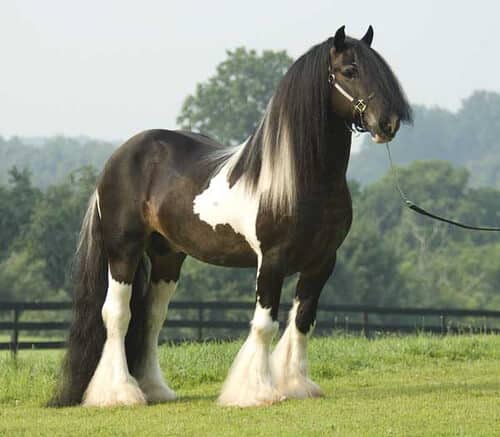
The Gypsy horse is a domestic horse breed developed in the British Isles by Romanichal and Irish Travellers.The Romani people dreamed of creating the perfect horse to pull their colourful “vardos” (living wagons). This horse needed to be strong, calm, and beautiful.These are Calm, gentle, docile, and incredibly people-oriented. They have a powerful, compact, and muscular build with a broad chest, a short and strong back. Their nerves are solid, making them reliable in chaotic situations. Due to their heavy feathering and sturdy build, Gypsy horses require specific care.
: The breed is predisposed to certain genetic conditions, including chronic progressive lymphedema (CPL) and polysaccharide storage myopathy (PSSM Type 1), which require careful management. They are smart and eager to please, making them highly trainable for both driving and riding. : Regular and thorough grooming of their long hair and feathers is essential to prevent skin conditions like pastern dermatitis. their smooth, comfortable gaits and unflappable nature make them wonderful trail partners. They typically stand between 52 to 64 inches high.
Key Facts
- Developed by Romani travelers in the UK and Ireland.
- Long, thick, flowing mane and tail
- Extremely gentle and calm
- They live long lives—often 25–30 years.
5. Knabstrupper
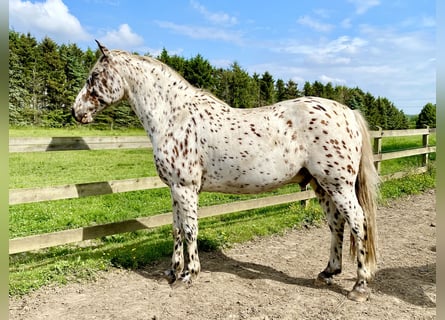
The Knabstrupper is a rare Danish warmblood horse breed famous for its leopard-spotted coat and versatile abilities. It’s often called the “Danish spotted horse.” Their height typically between 15.2 and 16 hands. Their lifespan about to 25-30 years. It is Originated in Denmark around 1812. The Knabstrupper is known for its dramatic patterns. The breed exhibits all the patterns associated with the Leopard Complex (LP) gene, the same gene found in Appaloosas. The most famous patterns include:
Varnish Roan / Marble: A roaned pattern that changes with age.
Leopard: A white coat with dark spots all over the body (like a Dalmatian).
Blanket: A solid base coat with a white “blanket” over the hips, with or without spots.
Snowcap: A solid base coat with a pure white blanket (no spots).
Few-spot Leopard: A mostly white horse with just a few spots, often on the legs and head.
They are generally very steady, kind, and eager to please, making them a joy to train. Crossbred with other warmbloods. Their power, elegance, and trainability make them excellent for dressage. Their strength and calm demeanor make them well-suited for combined driving.
Comparison with the Appaloosa
Since they share the same spotting gene, it’s helpful to compare them.
| Feature | Knabstrupper | Appaloosa |
|---|---|---|
| Origin | Denmark | United States (bred by the Nez Perce people) |
| Primary Ancestry | European warmblood & baroque horses (Frederiksborg) | Spanish stock, Mustangs |
| Modern Build | Often leans toward a European warmblood type, bred for dressage and jumping. | Often leaner and more quarter-horse-like, bred for ranch work and racing. |
Key Facts
- Height: 15.2 – 16.2 hands (sport type)
- Weight: 1,100 – 1,400 lbs depending on type
- Originated in Denmark around 1812.
- Once used by European circuses because of their dramatic looks and calm behavior.
So you seen the 5 Beautiful Horse Breeds in the world. If you liked our blog, please leave a nice comment.I hope this block has added a lot to your knowledge.
Now if you want to create more interesting blocks like this,

Here are the five Most Unusuals Motorbikes in the world.